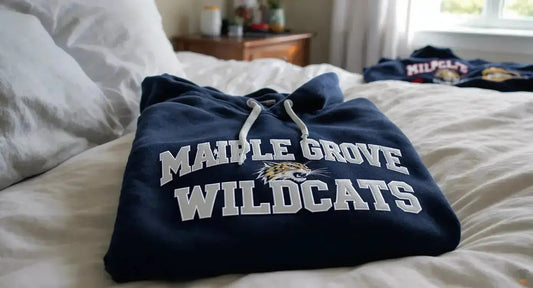
Winter Bleacher Survival, Explained

So, forty-five minutes into a January night game and your fingers have stopped working. The temperature isn't the only problem - it's that you're sitting perfectly still while 35-degree air sneaks through every gap in your hoodie.What kept you warm on a fall afternoon will fail completely when you're locked in place on cold metal for two hours. Fabric weight, zipper style, and a few low-tech tricks make the difference between watching the game and counting the minutes until you can leave. Some of this is about choosing the right spirit wear. Some of it's about cardboard and chemical heat packs. All of it assumes you'll be parked on bleachers until the final whistle.

Fabric Weight Saves You (Or Doesn't)

Most people buy "heavyweight" and assume they're covered. They're not. Fabric weight measures ounces per square yard - higher numbers mean thicker material that'll trap more heat. An 8-ounce hoodie feels substantial and looks thick, but sitting still flips the equation. Your body generates about 75% less heat sitting versus moving, which means you'll need fabric that's one or two weight categories heavier than what you'd wear for the same temperature if you were walking around.

Standard heavyweight hoodies usually run 8 to 9 ounces. That's fine down to around 40 degrees if you're sitting. Below that, you'll start freezing. True cold-weather weight is 10 to 12 ounces, which should handle the 30 to 40 degree range where most winter games happen. Anything below 30 degrees with wind and even 12-ounce fleece won't cut it - you'll need an insulated jacket on top.

Wind makes everything worse. Thirty degrees with 15 mph wind feels like 19 degrees. Wind will blow straight through gaps at the zipper, cuffs, and hem, which is why construction details matter as much as the fabric itself.

Most school spirit wear stores stock 8.5 to 9-ounce hoodies. Great for games above 40 degrees. For colder nights, you'll either need to layer underneath or look for the heavier options some schools carry from Carhartt or Champion's heavyweight lines. If the product description doesn't list an ounce weight, that's usually a sign to keep looking.

Pullovers Work Better in the Cold

Zip hoodies are convenient when you need temperature control all day. They're less useful when you're sitting still in 30 degrees for two hours straight. The zipper gap will let wind through even when it's fully closed, and that'll cost you somewhere between 5 and 10 degrees of effective warmth.

Pullovers seal you in, which means there's no wind cutting down the front of your torso. Some zip hoodies have a storm flap behind the zipper to help, and it does help, but it won't solve the problem entirely. For night games or anything below 35 degrees, you'll probably want the pullover.

The trade is adjustability. If temperatures swing during the game - say, 45 at kickoff and 60 by the fourth quarter - a zip lets you vent. But winter games don't usually warm up that much. And when you're sitting in the bleachers, wind chill stays consistent no matter what the air temperature does.

School spirit wear comes in both styles. Go with the pullover for night games and late-season matchups. Save the zip for milder days when you might actually open it.

Your Feet Freeze First

Cold rises from concrete and metal bleachers through your shoe soles. If you're wearing sneakers with thin soles, your feet will be numb within 30 minutes at 40 degrees. This is pure conduction - the cold surface pulls heat out faster than your body can replace it. Separate problem from air temperature. It'll happen even if the rest of you feels okay.

The fix comes in three parts: better soles, better socks, and a barrier. Boots with thick soles or 200+ grams of insulation should work for stationary cold. If you're not wearing boots, bring cardboard to stand on. Sounds ridiculous. Works perfectly. The cardboard creates an insulating layer, and you'll feel the difference immediately.

Cotton socks will lose all their warmth once they get damp from sweat, and you'll sweat even in cold weather. Wool keeps you warm when wet, which is why it's standard for winter hiking. A thin liner sock plus thick wool outer sock is what works. Make sure your boots fit the extra layer without cutting off circulation.

Hot Feet warmers last about 8 to 10 hours and heat exactly where you need it. Bring extras. Other parents will ask.

The Rest of the Survival Kit

Spirit wear handles your core. Everything else fills the gaps.

A stadium blanket should be first. Look for fleece that's at least 400 grams per square meter, or anything sherpa-lined. GSM measures blanket density like ounces measure hoodie fabric weight: higher numbers mean thicker and warmer. The sherpa or thick fleece versions will beat single-layer options. Waterproof backing stops moisture from the bleachers soaking through.

Hands go numb fast when you're sitting still, and mittens work better than gloves because your fingers share warmth. Chemical hand warmers activate around 135 degrees and last 8 to 10 hours. Stick them inside your mittens or pockets. The advice to "shove Hot Hands in all your crevices" is less of a joke when you're three hours into a tournament.

Your head and neck will lose heat fast in wind. Most team beanies work fine, but if your hoodie has a lined hood, you should double up - the beanie under the hood adds 5 to 10 degrees of warmth. An unlined hood is better than nothing but won't trap heat the way a lined one does.
Below 30 degrees, you'll be layering. A base layer - synthetic or merino wool that wicks moisture - goes under your heavyweight hoodie, and you'll want a wind-blocking shell on top. Skip cotton base layers.

Tournament parents who show up prepared are usually wearing some version of this: wicking base, insulating middle, wind-blocking outer.

A stadium seat cushion doesn't add warmth directly, but it'll create a barrier between you and the cold bleacher. The padded ones that hook over the bleacher back will beat flat cushions because they insulate both your seat and your back.

Build Your Cold Game Kit

Fabric weight, pullover construction, proper footwear, and the right accessories will get you through most winter games without misery. A 10-ounce pullover hoodie, wool socks in insulated boots, a good blanket, and hand warmers should cover the 30 to 40 degree range where most cold-weather games happen. Your school's spirit wear store probably carries 8.5-ounce and heavier hoodies plus team blankets, and every order puts 15% back into the program. Below 25 degrees with wind, even this setup will hit its limits. But for typical winter conditions, the right combination stops the bleachers from being unbearable and lets you actually watch the game.

Frequently Asked Questions

What You Need To Know

What fabric weight do I actually need for winter games?

Eight to 9 ounces works above 40 degrees when sitting. For 30 to 40 degrees, you need 10 to 12 ounces. Below 30, add an insulated jacket over your hoodie.

Are pullovers really warmer than zip hoodies?

Yes, by 5 to 10 degrees, because there's no zipper gap for wind. Zips are convenient when temperatures swing, but pullovers work better for sustained cold.

What's the cardboard trick?

Stand or sit on cardboard. It creates a barrier between your feet and cold metal or concrete, cutting heat loss through thin soles.

Do I really need wool socks?

Cotton loses all its insulation when damp from sweat. Wool stays warm when wet. Layer a thin liner sock under thick wool.

How long do Hot Hands last?

Eight to 10 hours once activated. Bring extras - you'll go through more than you expect on tournament days.

Can I just layer underneath a lighter hoodie?

A base layer plus 8-ounce hoodie works for 35 to 45 degrees. Below that, you'll need a heavier outer layer or wind-blocking shell on top.
Back to blog

Leave a comment

Please note, comments need to be approved before they are published.